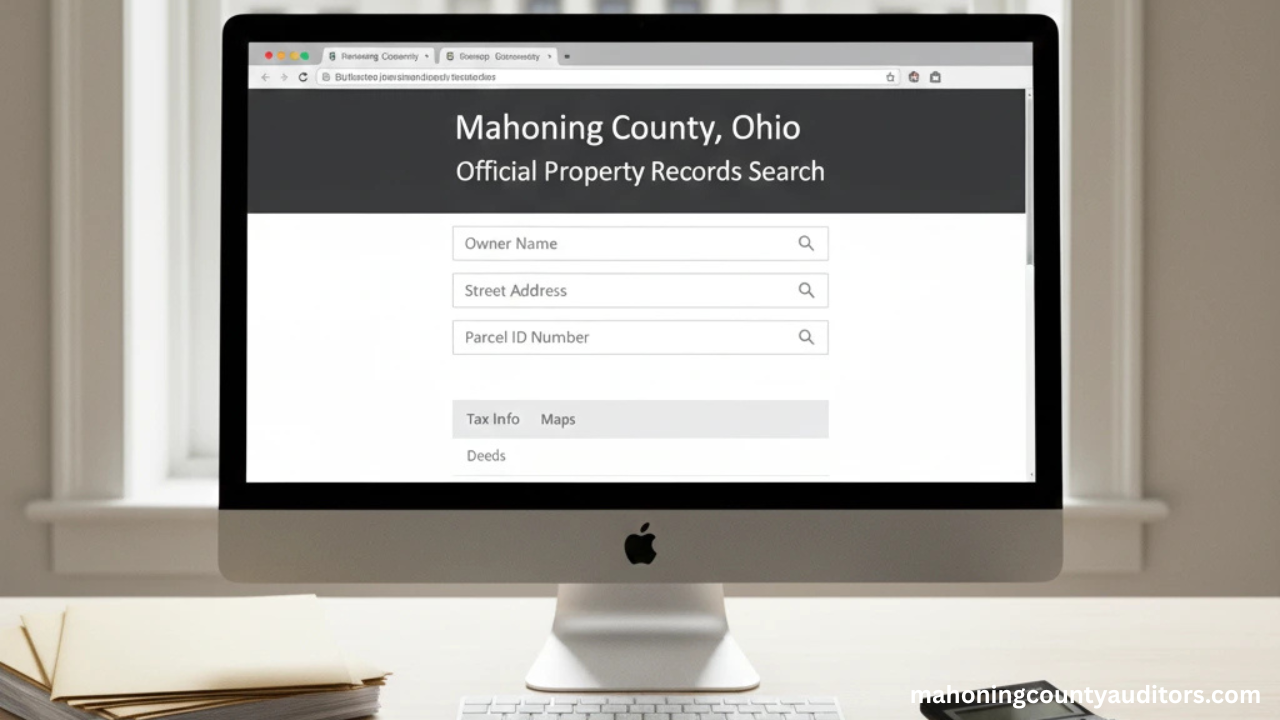
The Mahoning County GIS map is an interactive public mapping system that helps users view property boundaries, parcel information, and land data across Mahoning County, Ohio. It is commonly used by homeowners, buyers, and researchers for visual property verification and location-based research.

Unlike static records, the Mahoning County GIS map presents interactive layers. You can zoom in on neighborhoods, review parcel outlines, and understand how properties are positioned in relation to roads, districts, and nearby land.
People often use the Mahoning County GIS map for:
- Checking property lines
- Reviewing parcel numbers
- Exploring zoning classifications
- Viewing aerial imagery
- Comparing nearby properties
From homeowners verifying lot sizes to real estate professionals conducting market research, the Mahoning County GIS map serves as a practical visual reference tool.
What You Can Find Inside the Mahoning County GIS Map
The Mahoning County GIS map includes multiple layers of geographic and property-related information. Each layer helps users understand land data in a more organized and visual way.
Parcel Boundaries and Property Lines
One of the most searched features of the Mahoning County GIS map is parcel boundaries. These outlines show how land is divided within the county. Users can:
- Identify exact parcel shapes
- See neighboring lot divisions
- Review boundary alignment
While the Mahoning County GIS parcel viewer gives a visual representation of property lines, it should not be treated as a legal survey.
Ownership and Parcel Information
The Mahoning County GIS map may display publicly available parcel details such as:
- Parcel identification number
- Property classification
- Lot size
- Assessment references
This information supports general research but should always be verified through appropriate sources before making financial or legal decisions.
Zoning and Land Use Layers
Zoning is another important feature within the Mahoning County GIS map. Users researching construction, business planning, or development often review zoning layers to understand permitted land use.
Common zoning insights include:
- Residential zones
- Commercial zones
- Industrial districts
- Agricultural areas
By toggling layers on the GIS parcel map, users can better understand how land is categorized across different neighborhoods.
Aerial Imagery and Geographic Context
The aerial imagery feature of the Mahoning County GIS map allows users to view properties from above. This helps in:
- Identifying structures
- Seeing driveways and access roads
- Evaluating surrounding land
For buyers and investors, aerial layers add visual clarity that written records alone cannot provide.
How to Access the Mahoning County GIS Map
Accessing the Mahoning County map is typically done online through a web-based mapping platform. Many users search directly for the Mahoning County map when they need quick parcel data.
Basic Access Steps
Although interfaces may update over time, the general process to use the Mahoning County map includes:
- Open the online GIS portal
- Use the search bar
- Enter parcel number, address, or owner name
- Select the correct property result
- Explore available layers
The GIS map interface usually includes zoom tools, layer toggles, and measurement options.
Desktop vs Mobile Experience
The Mahoning County map works best on a desktop screen due to detailed map layers. While mobile access is possible, complex layer navigation may feel limited on smaller screens.
Users conducting serious property research often prefer larger displays for better accuracy and visibility.
How to Search Property on Mahoning County GIS parcel viewer

Understanding how to search properly makes the Mahoning County GIS map much more effective. For the most accurate and updated parcel data, users should refer to the official Mahoning County GIS portal provided by county authorities.
Search by Parcel Number
Parcel number searches are typically the most accurate method. When using the GIS parcel map
- Enter the full parcel number exactly as recorded (even small mistakes can return wrong results)
- If the system does not return results, try removing spaces or dashes
- Always confirm the property location on the map before relying on results
This method reduces confusion when multiple properties share similar addresses.
Search by Address
If parcel numbers are unknown, address searches are common. The Mahoning County map allows users to input:
- Street number
- Street name
- City
Always double-check spelling to ensure correct results.
Search by Owner Name
Some users prefer searching by owner name within the Mahoning County map. This can be helpful when:
- Researching multiple properties
- Reviewing ownership history
- Comparing related parcels
Common Reasons People Use the Mahoning County land records map
The Mahoning County map is widely used by residents, investors, and professionals who need reliable geographic property insights. Because it combines parcel data with visual mapping layers, it becomes more than just a search tool. It provides context.
Real Estate Research and Property Evaluation
Buyers and real estate agents often rely on the county mapping system to better understand a property before scheduling visits. It helps users:
- View surrounding parcels
- Check lot dimensions
- Compare nearby properties
- Understand road access
Seeing property boundaries visually gives buyers confidence. It reduces uncertainty and allows smarter research before making financial decisions.
Boundary Verification and Planning
Homeowners sometimes access the Mahoning County GIS map when planning fences, additions, or landscaping projects. While it does not replace a professional survey, it offers a general reference for:
- Approximate lot lines
- Adjoining properties
- Shape and depth of land
This early research can prevent confusion and support better planning decisions.
Zoning and Development Review
Contractors, investors, and small business owners use the Mahoning County map to explore zoning classifications. Understanding zoning map Mahoning County layers can help determine whether land is:
- Residential
- Commercial
- Mixed-use
- Industrial
This saves time before contacting planning offices for detailed verification.
Mahoning County GIS Map vs Property Tax Lookup
Many users confuse the county mapping system with a property tax lookup system. While they are related, they serve different purposes.
Key Differences Explained
The Mahoning County map focuses on visual geographic representation. A tax lookup system focuses more on financial data.
Here is a simple comparison:
| Feature | Mahoning County GIS map | Property Tax Lookup |
|---|---|---|
| Visual Parcel Map | Yes | No |
| Boundary Lines | Yes | Limited |
| Aerial Imagery | Yes | No |
| Tax Amount Details | Limited | Yes |
| Geographic Layers | Yes | No |
If you want to see property boundaries and spatial layout, the Mahoning property mapping tool is useful. If you want tax balances or payment history, a tax lookup tool is more appropriate.
Using both tools together often provides the most complete understanding.
Pros and Cons of Using the Mahoning County GIS Map
Every online property map tool has strengths and limitations. The property mapping tool is no exception.
Pros
- Interactive visual property overview
- Multiple geographic data layers
- Helpful for neighborhood comparison
- Accessible online for public research
- Supports Mahoning County parcel search needs
Users often appreciate how quickly the Mahoning County map displays parcel outlines and aerial context.
Cons
- Not a legal land survey
- Data updates may not be real-time
- Interface can feel complex for beginners
- Limited detailed tax breakdown
Understanding these pros and cons allows users to use the Mahoning County map responsibly and realistically.
Tips for Accurate Property Research Using the County GIS Map
When using the Mahoning County map, careful research habits improve accuracy.
Double-Check Parcel Information
Always confirm:
- Parcel number accuracy
- Address spelling
- Lot dimensions
Even small typing errors can lead to incorrect results in the Mahoning County GIS map.
Cross-Reference Multiple Sources
For important decisions, compare the interactive parcel viewer data with:
- Recorded property documents
- Tax assessment records
- Professional surveys
This layered approach strengthens confidence and reduces risk.
Understand Map Limitations
GIS property lookup tools are designed for informational viewing. Boundaries shown on the Mahoning County map are approximate and should not be used for legal disputes or construction staking without professional confirmation.
Frequently Asked Questions
Is the Mahoning County GIS map an official legal record?
The Mahoning County map provides public geographic data for informational use. It is not a certified legal survey or deed document.
Can I print maps from the Mahoning County parcel map?
Most GIS systems allow map printing or PDF export options. However, printed maps should be treated as reference material only.
How often is data updated?
Update frequency varies. Users should verify time-sensitive information through appropriate channels before making decisions.
Is the Mahoning County GIS map free to use?
Public GIS systems are generally accessible online, but availability and features may vary.
Conclusion
The Mahoning County GIS map is a helpful tool for viewing property boundaries, parcel details, and land information in a simple visual format. It is useful for basic property research, planning, and understanding land layout.
However, it is not a legal survey, so official records should always be used for final verification. Overall, it serves as a quick and practical starting point for property research in Mahoning County.