The Mahoning County Criminal Records Search Guide is designed to help residents, employers, landlords, and researchers understand how criminal records work in Mahoning County, Ohio. Criminal records are official documents that show a person’s involvement in criminal proceedings, including arrests, charges, court hearings, and case outcomes.
In the United States, most criminal records are considered public records under Ohio law. However, access may vary depending on the type of case, whether the record is sealed, or if it involves juveniles. Many people search these records to verify background information, review court case history, or confirm arrest details.
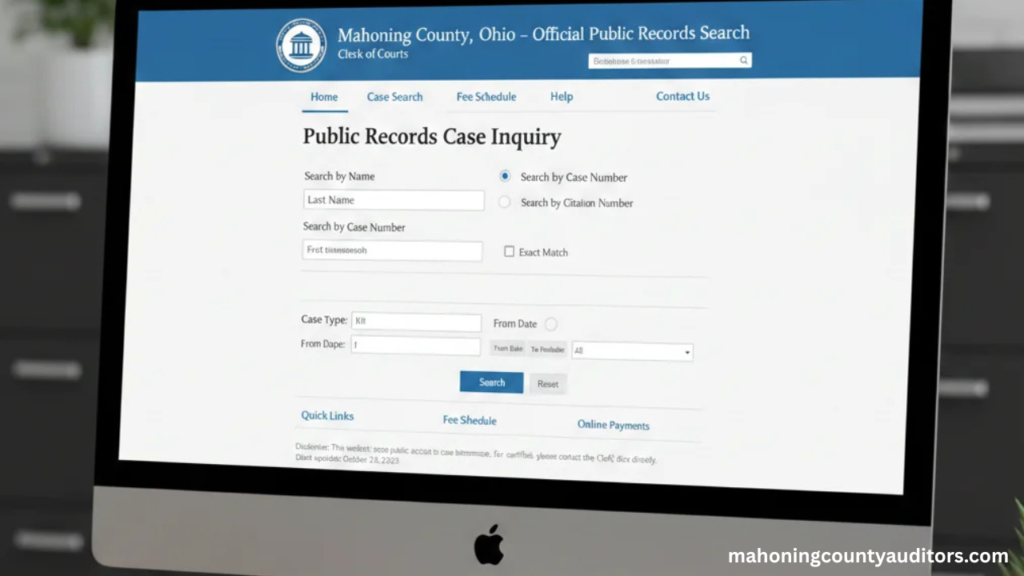
This guide explains where records are stored, how to search them online, and what information you can legally access. It is intended for informational purposes only and does not represent any government office.
What Are Mahoning County Criminal Records?
Mahoning County criminal records are official documents that detail a person’s criminal history within the county’s jurisdiction. These records are typically created after an arrest, citation, or formal criminal charge. They may include misdemeanors, felonies, probation violations, and sentencing outcomes.
Criminal records can contain:
- Defendant’s full legal name
- Case number
- Filed charges
- Court hearing dates
- Disposition or verdict
- Sentencing information
It is important to understand that an arrest does not automatically mean a conviction. Some cases are dismissed, reduced, or resolved without a guilty finding. Additionally, certain records may be sealed under Ohio law and may not appear in public searches.
Understanding the difference between arrest records, court records, and inmate records helps users avoid confusion when conducting a search.
Who Maintains Mahoning County Criminal Records?
Key Authorities for Criminal Records in Mahoning County
In Mahoning County, multiple agencies manage different types of criminal records. Understanding which office maintains which record helps you search efficiently and legally.
Mahoning County Clerk of Courts
The Mahoning County Clerk of Courts is the primary custodian for court records. This includes felony, misdemeanor, traffic-related criminal cases, and case filings. They maintain digital and physical copies, provide certified copies on request, and offer guidance on accessing public records.
Mahoning County Sheriff’s Office
The Sheriff’s Office manages arrest records, booking information, and inmate details. Their inmate search system allows the public to verify current detention status, charges, and court dates. The Sheriff also assists law enforcement agencies with background investigations.
Mahoning County Common Pleas Court
This court handles felony cases and major civil matters. They store detailed court documents, such as indictments, trial transcripts, and sentencing orders. Individuals seeking official court decisions or filings often contact this office.
Ohio Department of Rehabilitation and Correction (ODRC)
For individuals sentenced to state facilities, the ODRC maintains incarceration records and release information. While not local, these records are critical for comprehensive criminal history searches in Ohio.
Summary Table
| Office | Type of Records | Access Method |
|---|---|---|
| Clerk of Courts | Court cases, filings, case outcomes | Online search, in-person request |
| Sheriff’s Office | Arrests, inmate records, booking info | Online inmate lookup, phone inquiry |
| Common Pleas Court | Felony case details, trial transcripts | Visit courthouse, request copies |
| ODRC | State prison incarceration & release | Online offender search |
By knowing the specific roles of these offices, residents and employers can quickly locate the information they need. Always remember that some records may be restricted due to privacy laws or sealing orders.
How to Search Mahoning County Criminal Records Online
Step-by-Step Online Search for Criminal Records
Searching Mahoning County criminal records online is the fastest and most convenient method for accessing arrest, court, and inmate information. Multiple official portals allow residents, employers, and researchers to retrieve accurate public records without visiting offices in person.
1. Start with the Mahoning County Clerk of Courts Website
Visit the official Clerk of Courts portal. Use the name-based search feature to locate criminal case records. Enter the individual’s full legal name, and narrow results by filing date or case type if possible.
2. Search Arrest and Inmate Records with the Sheriff’s Office
The Mahoning County Sheriff’s Office maintains arrest logs and current inmate information. Many users start here to verify whether an individual is currently in custody. You can filter results by booking date or last name.
3. Use Case Number Searches
If you know the case number, online portals allow direct access to the case file. This provides quicker results and ensures you are viewing the correct individual’s record.
4. Verify Information Across Multiple Sources
Cross-reference data between the Clerk of Courts, Sheriff’s Office, and Common Pleas Court records. This helps ensure the information is complete and accurate.
5. Understand Search Limitations
- Juvenile records are restricted and not publicly accessible
- Sealed or expunged records may not appear
- Some older records may not be digitized
Tips for an Efficient Search
- Have full legal names and dates of birth ready
- Keep notes of case numbers for future reference
- Avoid third-party websites with incomplete data
By following these steps, you can access Mahoning County criminal records online efficiently while staying compliant with Ohio law. Online searches save time, reduce travel, and allow for easy record verification from anywhere in the US.
How to Request Mahoning County Criminal Records in Person or by Mail
Accessing Criminal Records Offline
While online searches are convenient, some individuals or organizations prefer requesting Mahoning County criminal records in person or via mail, especially for certified copies or older records not yet digitized. Understanding the process ensures accurate and timely access.
Requesting Records In Person
- Visit the Appropriate Office: Depending on the record type, go to the Mahoning County Clerk of Courts, Sheriff’s Office, or Common Pleas Court.
- Provide Identification: Bring a government-issued photo ID to verify your identity.
- Specify the Record Type: Clearly indicate whether you need arrest records, case files, or inmate information.
- Request Certified Copies: If the record is needed for legal, employment, or official purposes, ask for a certified copy.
- Pay Applicable Fees: Office fees vary depending on record type and number of pages.
Requesting Records by Mail
- Obtain the Request Form: Most offices provide downloadable request forms on their official website.
- Fill Out Details Accurately: Include the full name, date of birth, case number (if known), and the specific records you need.
- Include a Copy of Your ID: Attach a photocopy of a valid government-issued ID.
- Include Payment: Check or money order for applicable fees.
- Mail to the Appropriate Office: Address it to the Clerk of Courts or Sheriff’s Office, depending on the record type.
Comparison Table: Online vs Offline Requests
| Method | Speed | Cost | Accessibility | Notes |
|---|---|---|---|---|
| Online | Fast | Low/Free | 24/7 | Limited to digital records |
| In-Person | Moderate | Fee-based | Office hours | Certified copies possible |
| Slow | Fee-based + postage | Nationwide | Useful for older or certified records |
By following these steps, you can reliably obtain Mahoning County criminal records offline. This method is ideal for individuals needing official documentation for legal, employment, or verification purposes.
What Information Is Included in a Mahoning County Criminal Record
Understanding the Contents of Criminal Records
A Mahoning County criminal record provides a detailed history of a person’s interactions with the criminal justice system. Knowing what information is included helps users interpret records accurately and avoid confusion. These records are primarily for informational purposes and can support background checks, legal inquiries, or personal research.
Common Details Found in Criminal Records
- Full Legal Name: Includes first, middle, and last names, plus aliases if recorded.
- Case Number: Each case is assigned a unique identifier for tracking and verification.
- Charges Filed: Lists misdemeanor or felony charges, including traffic-related offenses.
- Court Hearing Dates: Shows scheduled trial, arraignment, and sentencing dates.
- Case Status: Indicates whether the case is pending, dismissed, or resolved.
- Sentencing Information: Provides details on fines, probation, jail, or prison sentences.
- Inmate Status (if applicable): Includes incarceration location, release date, and custody status.
Additional Details That May Appear
- Arrest Records: Booking photos and arresting agency information (if publicly available).
- Expunged or Sealed Records: Typically noted but not fully accessible.
- Legal Motions or Orders: Court-issued motions, restraining orders, or sentencing modifications.
Tips for Reading Criminal Records
- An arrest does not automatically indicate a conviction.
- Some older records may have incomplete information if not digitized.
- Always cross-reference multiple sources to ensure accuracy.
Why This Information Matters
Understanding the contents of a Mahoning County criminal record allows employers, landlords, and researchers to make informed decisions. It also ensures users respect privacy laws and avoid misinterpreting data, supporting ethical and responsible use of public records.
Criminal Records vs Background Checks in Ohio

Understanding the Difference
Many people searching for Mahoning County criminal records often confuse criminal records with background checks. While related, these are distinct tools with different purposes. Knowing the difference helps residents, employers, and researchers access accurate information and comply with Ohio law.
What Are Criminal Records?
Criminal records document a person’s criminal history within Mahoning County or the state of Ohio. They include:
- Arrests and booking information
- Charges filed in court
- Court case outcomes and sentencing
- Inmate status (if applicable)
These records are official public documents maintained by local law enforcement, the Clerk of Courts, or state agencies. Criminal records are generally case-specific and cover only the jurisdiction where the crime occurred.
What Are Background Checks?
A background check is a broader review of an individual’s history. Employers, landlords, or organizations often use them to assess:
- Criminal history across multiple counties or states
- Employment verification
- Education and professional licenses
- Credit reports and financial history
Background checks may combine information from criminal records, court documents, and third-party databases. In Ohio, they must comply with federal laws like the Fair Credit Reporting Act (FCRA), which regulates how information can be used.
Comparison Table: Criminal Records vs Background Checks
| Feature | Criminal Record | Background Check |
|---|---|---|
| Scope | County or state-specific | Multi-state or nationwide |
| Contents | Arrests, charges, court cases, sentencing | Criminal history, employment, education, credit |
| Purpose | Legal verification, research | Hiring, tenancy, due diligence |
| Source | Court or law enforcement | Multiple databases, public records |
| Access | Public or certified copy | Often requires consent and authorization |
Key Takeaways
Understanding the difference ensures responsible use of information. Mahoning County criminal records provide precise case details, while background checks offer a broader context for decision-making. Always verify records with official sources and avoid relying solely on third-party databases.
How to Correct Errors in Mahoning County Criminal Records
Correcting Mistakes in Criminal Records
Sometimes, Mahoning County criminal records may contain errors such as incorrect spellings, wrong dates, or misreported case outcomes. Addressing these mistakes promptly is important to prevent legal or personal complications, especially for employment, housing, or professional licensing purposes.
Identify the Error
Before taking any action, review the record carefully:
- Verify the spelling of the full legal name
- Confirm birthdate or personal identifiers
- Check case numbers and filing dates
- Compare charges, court dates, and sentencing information
Contact the Appropriate Authority
Depending on the error, reach out to:
- Clerk of Courts: For case filings, court outcomes, and documentation errors
- Sheriff’s Office: For arrest or inmate record inaccuracies
- Ohio Department of Rehabilitation and Correction (ODRC): For incarceration-related mistakes
Filing a Correction Request
- Prepare Documentation: Include copies of identification, legal documents, or proof of error.
- Submit a Formal Request: Offices may require a written request or specific form detailing the error.
- Follow Up: Confirm receipt and expected processing time; some corrections may take weeks.
Expungement and Sealing Records
In Ohio, some criminal records can be sealed or expunged, which removes them from public view:
- Expungement typically applies to minor offenses or cases with favorable outcomes
- Sealed records remain in the court system but are not publicly accessible
Tips for Accuracy
- Always cross-check records from multiple official sources
- Keep copies of all correspondence with county offices
- Avoid relying solely on third-party sites for corrections
Correcting errors ensures your Mahoning County criminal record accurately reflects your history. It also protects your rights and helps maintain trust when these records are accessed by employers, landlords, or legal professionals.
Are Mahoning County Criminal Records Public?
Understanding Public Access in Ohio
Many people wonder whether Mahoning County criminal records are publicly accessible. In Ohio, criminal records are generally considered public under the Ohio Public Records Law, meaning residents, researchers, employers, and landlords can view certain information. However, access depends on the type of record, privacy laws, and whether the record has been sealed or expunged.
Which Records Are Public?
Publicly available records typically include:
- Adult criminal cases filed in county courts
- Arrest records and booking information
- Court case outcomes, including convictions and sentencing
- Active and closed felony or misdemeanor cases
Records with Limited Access
Some records are restricted to protect privacy:
- Juvenile records: Generally sealed and unavailable to the public
- Expunged or sealed adult records: Cannot be accessed without court authorization
- Ongoing investigations: Certain arrest or court details may be withheld
How to Access Public Records
- Online Portals: Most records are searchable via the Clerk of Courts or Sheriff’s Office websites.
- In-Person Requests: Visit the appropriate office to request copies of public records.
- Mail Requests: Submit a written request with identification and applicable fees for certified copies.
Ethical and Legal Considerations
Even though criminal records may be public, it is important to use the information responsibly:
- Avoid misuse of personal data
- Do not discriminate based on criminal history
- Always verify with official county sources
Key Takeaway
Yes, Mahoning County criminal records are mostly public, but accessibility varies depending on age, sealing, or privacy restrictions. Being aware of these limitations ensures legal and responsible use of public records while maintaining compliance with Ohio law.
Safety & Legal Considerations When Using Criminal Records
Responsible Use of Mahoning County Criminal Records
When accessing Mahoning County criminal records, it is important to consider legal and ethical responsibilities. These records contain sensitive information that can impact a person’s life, so using them carefully ensures compliance with Ohio and federal laws.
Legal Guidelines
- Fair Credit Reporting Act (FCRA): Employers and landlords must follow federal guidelines when using criminal history for hiring or rental decisions.
- Non-Discrimination: Ohio law prohibits unfair treatment based solely on a criminal record. Consider the nature of the offense, time elapsed, and relevance to the role.
- Privacy Restrictions: Juvenile records, sealed, or expunged records are off-limits unless explicitly authorized by law.
Safety Tips for Users
- Verify Accuracy: Cross-check information from multiple official sources to avoid mistakes.
- Limit Sharing: Avoid posting sensitive details publicly or on social media.
- Secure Storage: If you need copies for legal or professional purposes, store them safely and confidentially.
Ethical Use
- Use criminal records for legitimate purposes only, such as background checks, research, or legal verification.
- Avoid making assumptions based solely on an arrest or conviction; context matters.
- Inform individuals if their records are being used in employment or housing decisions, following Ohio regulations.
Key Takeaway
Accessing Mahoning County criminal records comes with responsibility. Understanding legal restrictions, verifying accuracy, and respecting privacy ensures safe, ethical, and compliant use. Responsible handling of records protects both the user and the individuals whose information is included.
Frequently Asked Questions About Mahoning County Criminal Records
Common Questions About Accessing Criminal Records
Here are some of the most frequently asked questions regarding Mahoning County criminal records, designed to help residents, employers, and researchers navigate the process safely and efficiently.
1. How do I search Mahoning County criminal records for free?
You can access basic criminal records online via the Mahoning County Clerk of Courts or Sheriff’s Office websites. These portals allow name-based searches without fees, though certified copies may require payment.
2. Are arrest records public in Mahoning County?
Yes, adult arrest records are generally public under Ohio law. Juvenile records, ongoing investigations, and sealed cases are restricted to protect privacy.
3. How long do criminal records stay on file in Ohio?
Records typically remain indefinitely unless they are expunged or sealed by a court. Minor offenses may be eligible for expungement after a set period.
4. Can I remove my criminal record from public access?
Some records can be expunged or sealed under Ohio law. Expungement removes public access to certain offenses. Contact the Clerk of Courts for eligibility and application procedures.
5. What is the difference between an arrest and a conviction?
An arrest means a person was taken into custody for suspected criminal activity. A conviction is a legal determination of guilt by a court. Not all arrests result in convictions.
6. Can employers or landlords access Mahoning County criminal records?
Yes, but they must follow federal and Ohio regulations, including FCRA compliance and ethical usage. Records should only be used for legitimate purposes, like hiring or tenancy screening.
Key Takeaway
FAQs help users understand Mahoning County criminal records and access them responsibly. Always verify information with official county sources, respect privacy laws, and use records ethically.
Conclusion
Accessing Mahoning County criminal records is an important step for residents, employers, landlords, and researchers who need accurate legal information. Whether searching online, requesting records by mail, or visiting county offices, understanding the types of records available and the authorities that maintain them is essential.
This guide has outlined step-by-step instructions for searching criminal records, explained what information is included, clarified the difference between criminal records and background checks, and highlighted legal and ethical considerations. It also covered how to correct errors and the limitations on public access, ensuring responsible and informed use.
Always verify records through official channels like the Clerk of Courts, Sheriff’s Office, or state correction agencies. Respect privacy laws, avoid misuse of sensitive information, and comply with federal and Ohio regulations when using records for employment, housing, or legal purposes.
By following these guidelines, you can confidently navigate Mahoning County criminal records, access accurate information, and make responsible decisions based on trustworthy data. This resource serves as a comprehensive informational guide to help users understand and utilize public records safely and effectively.
Disclaimer:
The information provided about Mahoning County criminal records is for general informational purposes only. While we strive for accuracy, criminal records, case details, and access procedures may change without notice. Always verify information through official Mahoning County sources such as the Clerk of Courts, Sheriff’s Office, or relevant state agencies. This content does not constitute legal advice and should not be relied upon as such. Users are responsible for ensuring compliance with all applicable federal, state, and local laws when accessing or using criminal records.